What is my car actually worth in Canada?
Trade-in value, private-sale value, and auction value are three different numbers. Here's what separates them and which one you should be aiming for.
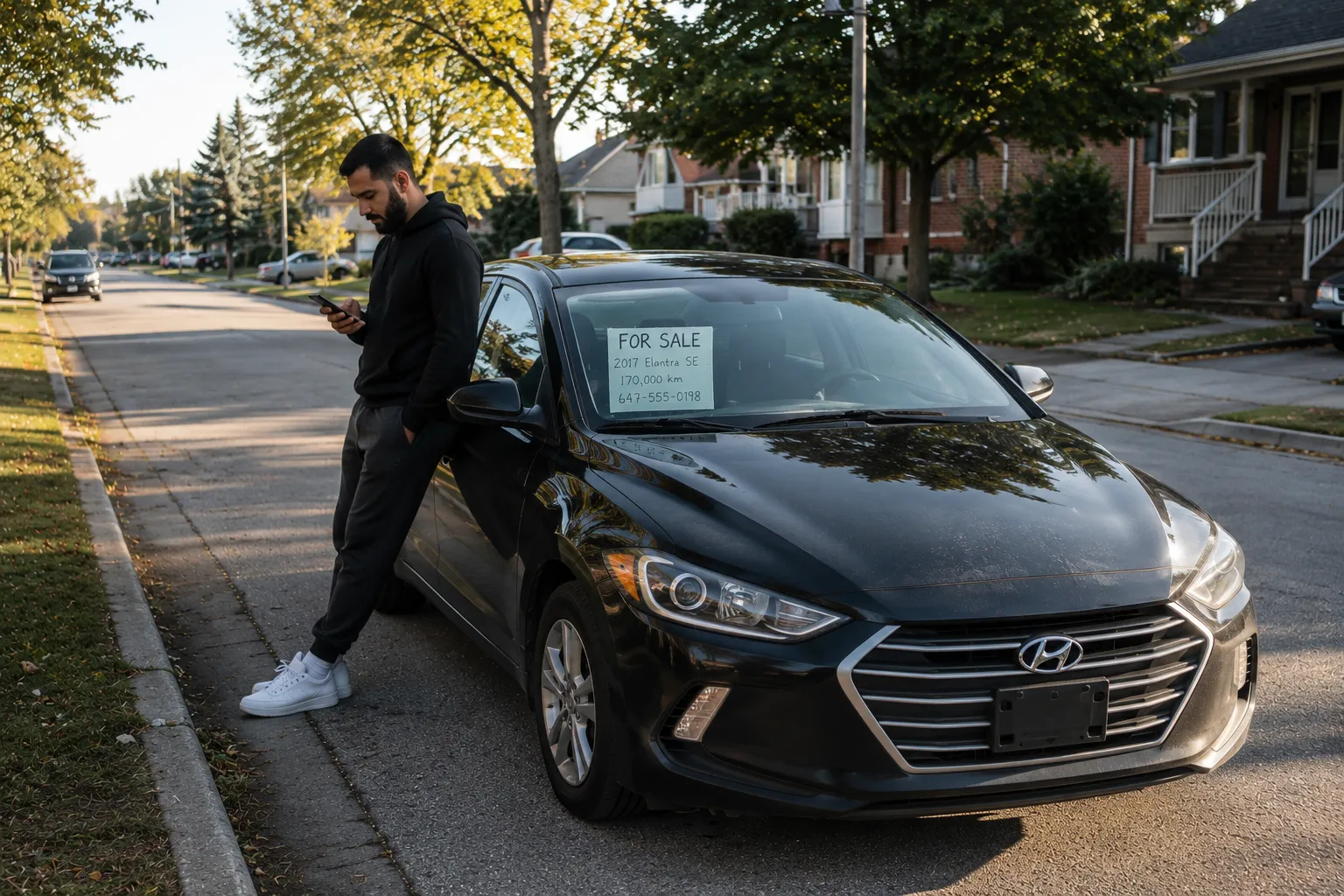
Ask three sources what your car is worth and you’ll get three answers. They’re not contradicting each other — they’re pricing three different transactions.
Trade-in value
What a dealer will credit you against your next car. It’s the lowest of the three, and deliberately so: the dealer is taking on the reconditioning, the floorplan cost, and the risk that it sits on the lot for ninety days. Convenience has a price and this is it.
Private-sale value
What a stranger will pay you on a Saturday. It’s the highest number on paper and the one people anchor to — but it’s a gross figure, not a net one. Subtract the listing time, the no-shows, the test drives with people you’ve never met, the safety certificate, and the risk of a payment going wrong.
Auction value
What a dealer will pay when other dealers are bidding against them. This is the number most sellers never see, because it only exists when there’s competition. A dealer bidding alone offers you trade-in money. The same dealer bidding against four others offers considerably more.
What actually moves your number
- Kilometers, more than age. Canadian average is roughly 20,000 km/year; being meaningfully under that is worth real money.
- Where you are. Trucks price higher in Alberta. Rust-free BC cars hold value. Dealers bid on what sells off their lot.
- History, not perfection. A documented accident properly repaired costs you less than an undocumented gap in the record.
- Timing. Convertibles in April, AWD in October. Seasonal demand is real and dealers price it in.
The honest summary
If you want the highest possible number and have a month to spend, sell privately. If you want it gone today and don’t mind paying for that, trade it in. If you want most of the private-sale upside without the strangers — that’s what an auction is for.